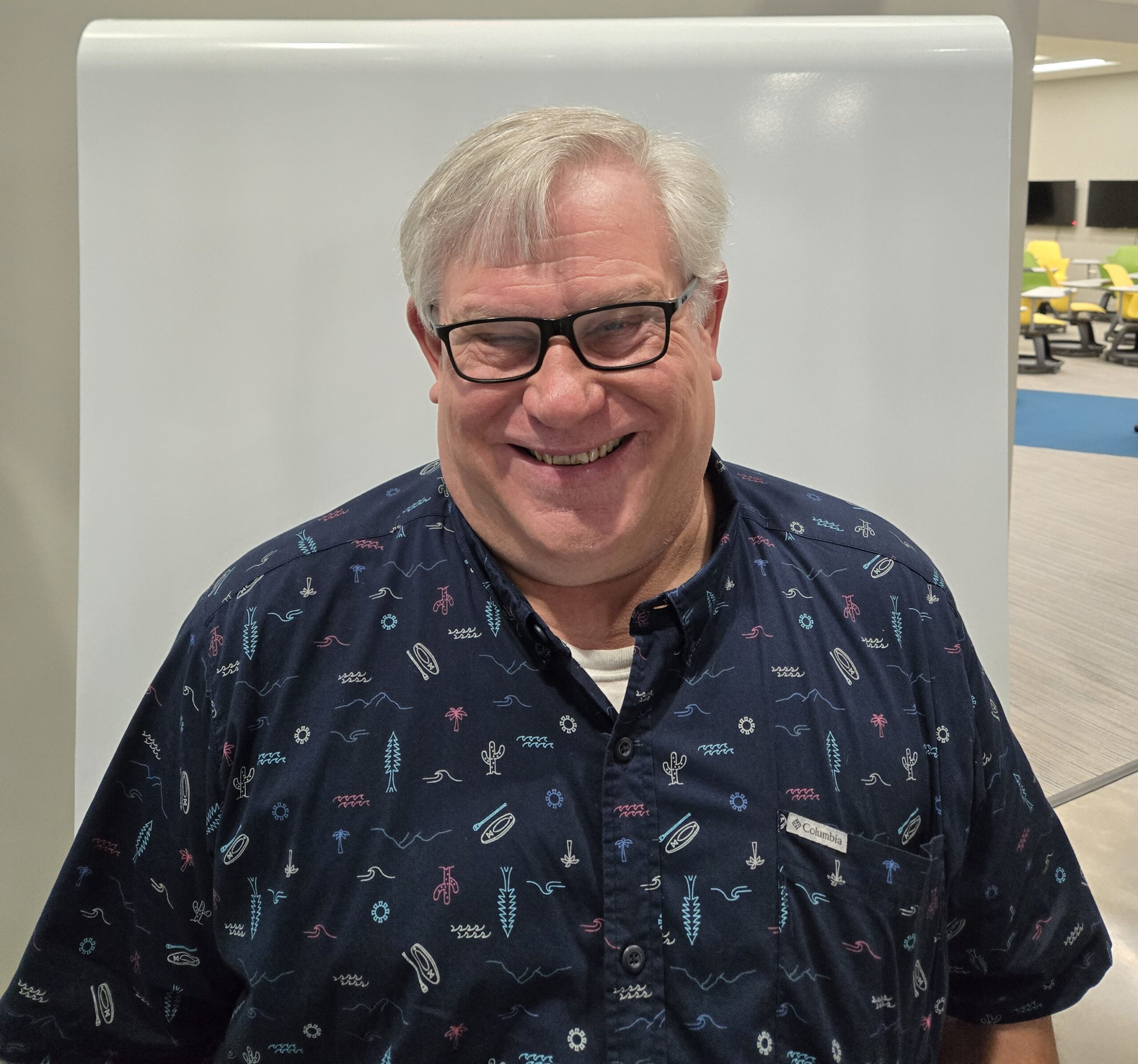
Tim Mueller began his teaching career in January of 1985, spending the spring semester as a
long-term sub for two pregnant English teachers in a suburban district outside Dallas, Texas.
August of 1985 found Mr. Mueller switched gears, as he helped start an alternative school in
Plano, Texas for at-risk students as a social studies teacher for grades 6-12. He would spend
the next seventeen years working as a social studies teacher in a variety of programs at the
alternative school. In January of 2004, Mr. Mueller again stepped into the role of an English
teacher at Spring Valley High School in Columbia, South Carolina, for a teacher who quit in the
middle of the school year. Mr. Mueller continued to teach English for grades 9-12 at Spring
Valley until the end of the 2014-15 school year. By this time, Mr. Mueller had obtained his
Master’s degree in Education from Southern Wesleyan University. The beginning of the
following school year found Mr. Mueller teaching all subjects—including GED preparation—for
the Department of Juvenile Justice at the main prison in Columbia. He left the juvenile prison six
years later to take over a social studies teaching position at A. C. Flora High School in Columbia
for a teacher who left early in the 2021-22 school year. He continued teaching both social
studies and English at A.C. Flora until he retired from teaching in 2025, a career that spanned
forty years. This is Mr. Mueller’s first year as the employability coach for the Power-I program.
He is looking forward to the challenge of working with students whose skills and abilities are
often overlooked or underappreciated.
Mr. Mueller’s first principal at the alternative school back in Texas told the entire faculty
something that he’s never forgotten. She said, “There’s no such thing as bad kids, only sad
kids.” Regardless of whether or not kids are mad, sad, or glad, this simple truth helped Mr.
Mueller remembers that all students are unique; that all students face challenges that can seem
overwhelming and even impossible for them, and that all students have the capacity to achieve
their goals if they are surrounded by adults who give them the support, encouragement, and
respect they need and deserve.